Best Riad Stays in Essaouira
Bab Doukkala is where most riad stays in Essaouira actually begin: porters meet arriving guests at the gate because no car reaches the courtyard doors stacked behind it, and the walk in past the spice stalls sets the tone for the whole stay. Riad la Rose Des Vents and Hostel & Riad both sit inside this stretch of the ramparts, a few minutes from Place Moulay Hassan and the fishing port, while Riad Rafeef and Luxury Riad Mounia push further into the walled centre where hammam treatments and rooftop breakfasts over the Mogador Islands are the norm rather than the exception.
الرياضات · Essaouira بالأرقام
 الرياضات
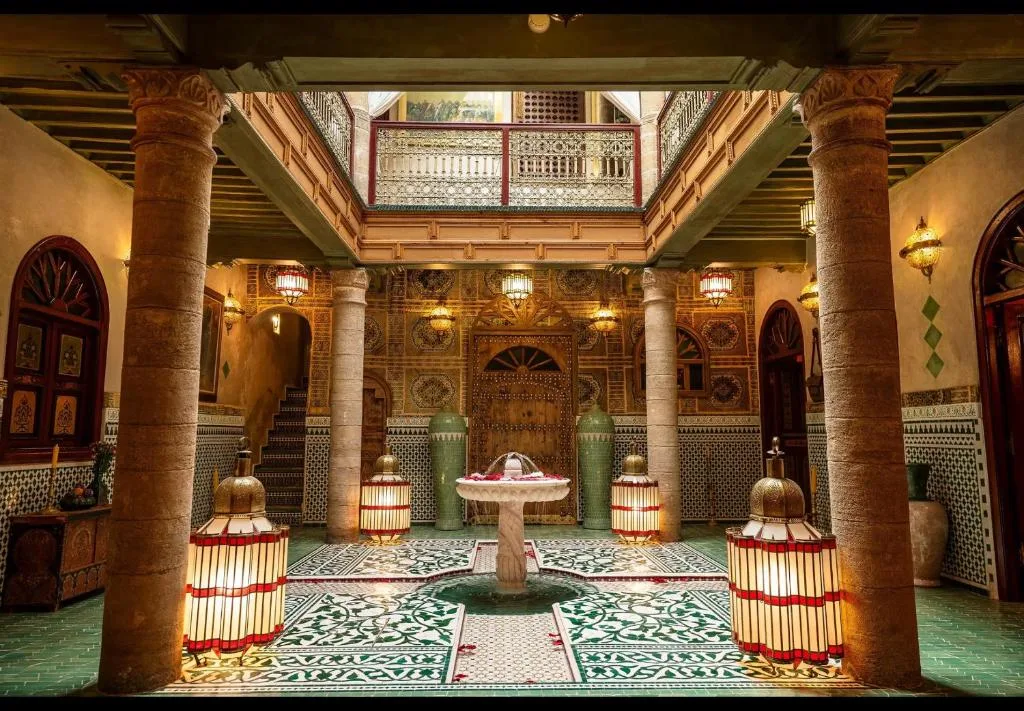
Riad Rafeef
 الرياضات
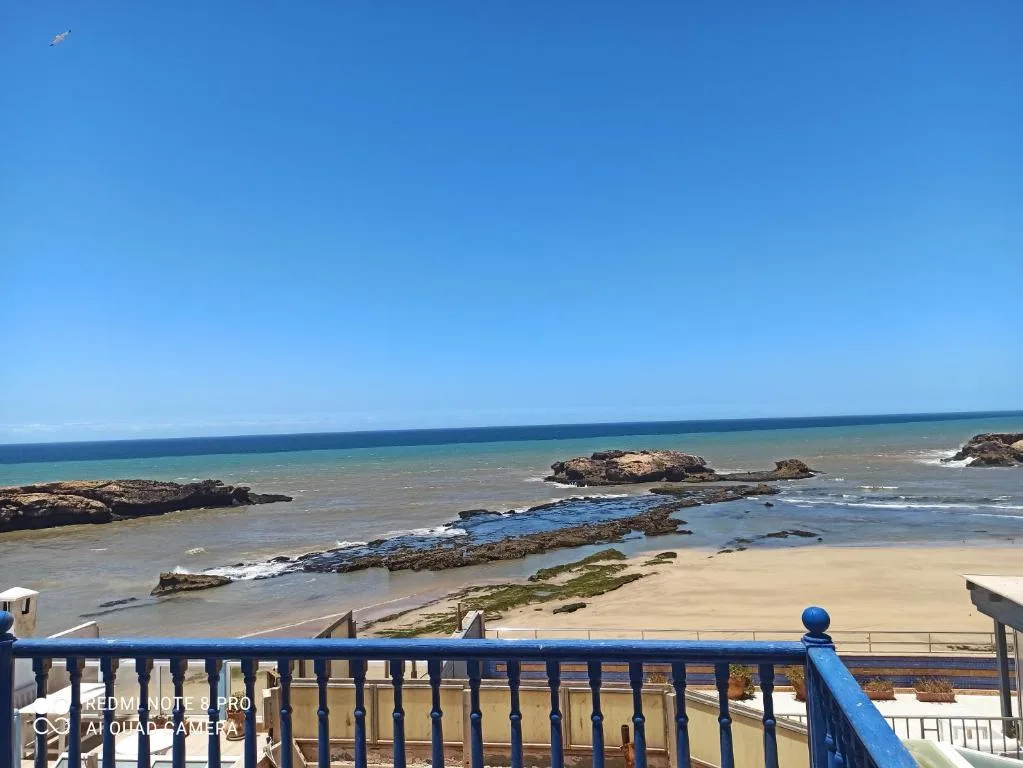
Riad La Rose Des Vents
 الرياضات
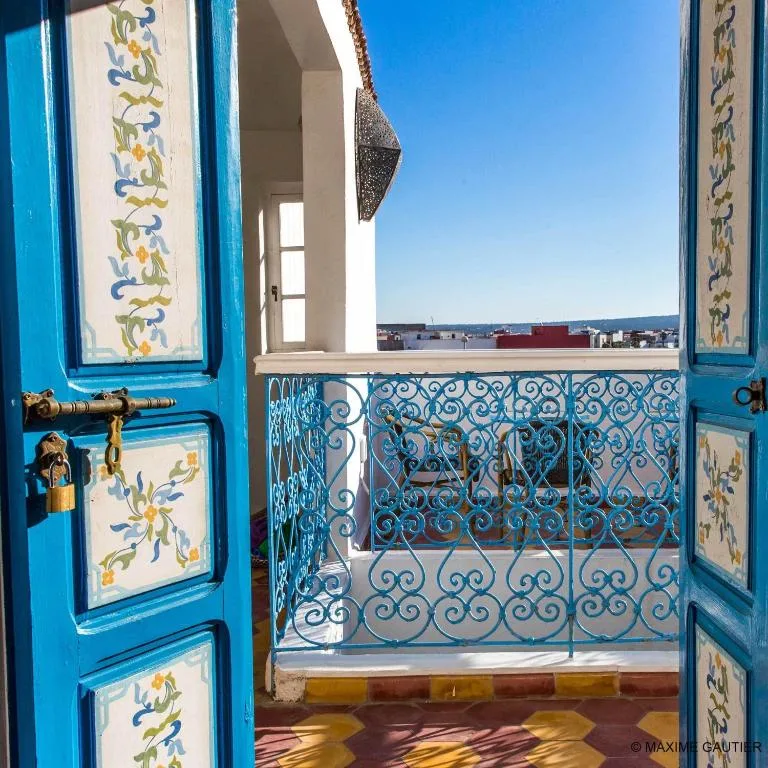
Hôtel Emeraude Essaouira
 الرياضات
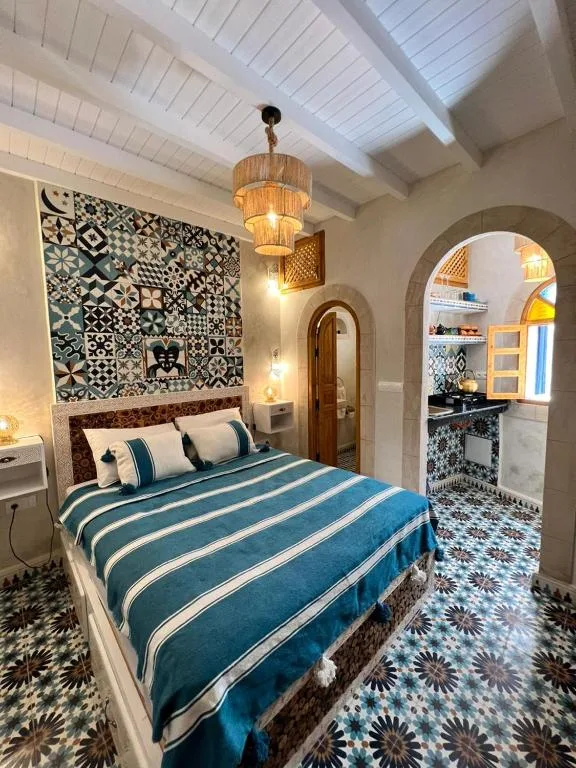
Riad dar el hania
 الرياضات
Hostel & Riad
 الرياضات
Luxury Riad Mounia
Riad life behind the ramparts
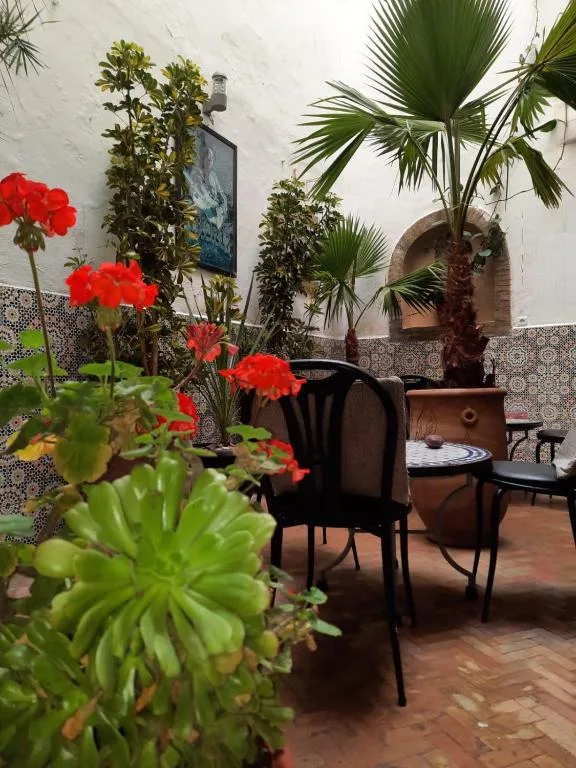
Arriving at a riad in Essaouira means arriving at a gate first, not a lobby. Bab Doukkala and Bab Sbaa are the two main entrances porters use to wheel luggage the last stretch, since Essaouira's ramparts were built for cannons and market carts, not vehicles. Riad la Rose Des Vents leans into this with a central location guests reach on foot from either gate in a few minutes, its rooms wrapped around the kind of interior courtyard that keeps the wind and the street noise out entirely, a contrast every first-time medina guest notices within the first hour.
The rooftop is where a riad stay in Essaouira earns its price over a plain hotel room. Riad la Rose Des Vents and Luxury Riad Mounia both open onto sun terraces that catch the same Atlantic light the Skala de la Ville ramparts are built to frame, close enough to Place Moulay Hassan that the port's gulls are audible at breakfast. Guests staying inside the walls trade the coast road's heated pools for this: a terrace view over the medina's rooftops and, on a clear morning, the outline of the Mogador Islands offshore.
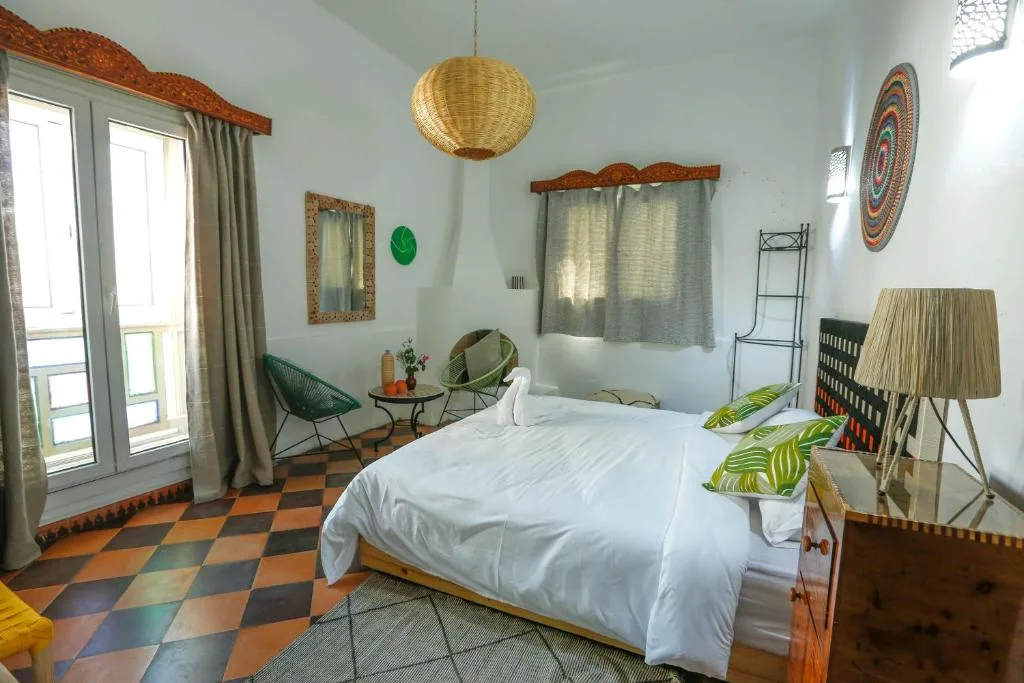
Riad Rafeef pushes the format toward a full spa stay, pairing its traditional restaurant and interior courtyard with a hammam and massage service that riad guests book directly rather than travelling out to the coast road for. That distinction matters in Essaouira specifically, since the medina's hammams are part of what separates a riad stay from a plain hotel one; guests who want spa treatment without leaving the ramparts gravitate here or to Hostel & Riad's more modest version of the same idea, a shared terrace and garden a short walk from Plage d'Essaouira.
Riad life in Essaouira runs on a walking radius, and that is deliberate: the ramparts enclose the medina tightly enough that Bab Doukkala, Bab Sbaa, the souks and Place Moulay Hassan are all reachable inside fifteen minutes from most riad doors. Riad dar el hania sits a seven-minute walk from Plage d'Essaouira on that same logic, prioritising proximity to the gates over car access. Anyone renting a car for the wider Golf de Mogador area should expect to park it outside the ramparts and walk the last stretch in, porter or no porter.
Essaouira's medina runs on foot traffic and sea wind rather than cars, and a riad stay puts guests right inside that rhythm from the first night. Mornings start with the port unloading its blue fishing boats near Place Moulay Hassan, afternoons bring the alizé wind strong enough to explain the Windy City of Africa nickname, and evenings settle into rooftop terraces looking out past the ramparts toward the Mogador Islands. Riad courtyards double as living rooms here, shielding guests from the wind that windsurfers chase two kilometres south on Plage d'Essaouira.
الرياضات · الأسئلة الشائعة
A riad stay in Essaouira means entering through Bab Doukkala or Bab Sbaa on foot, since cars cannot reach most medina doors, then settling into rooms built around a covered courtyard that blocks out the Atlantic wind. Rooftop terraces over the ramparts, not a lobby or car park, are the defining feature guests remember.